#include <Event.h>
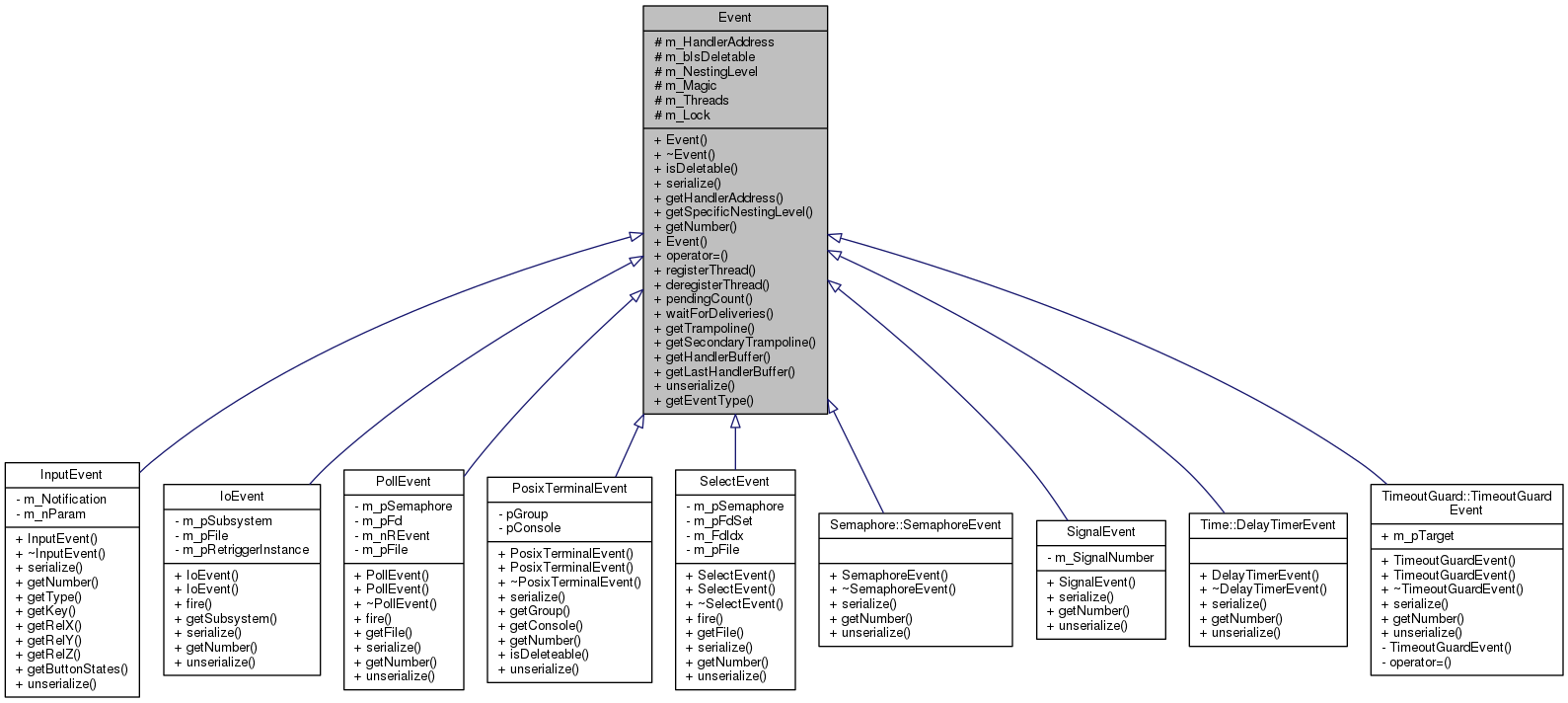
 Inheritance diagram for Event:
 Collaboration diagram for Event: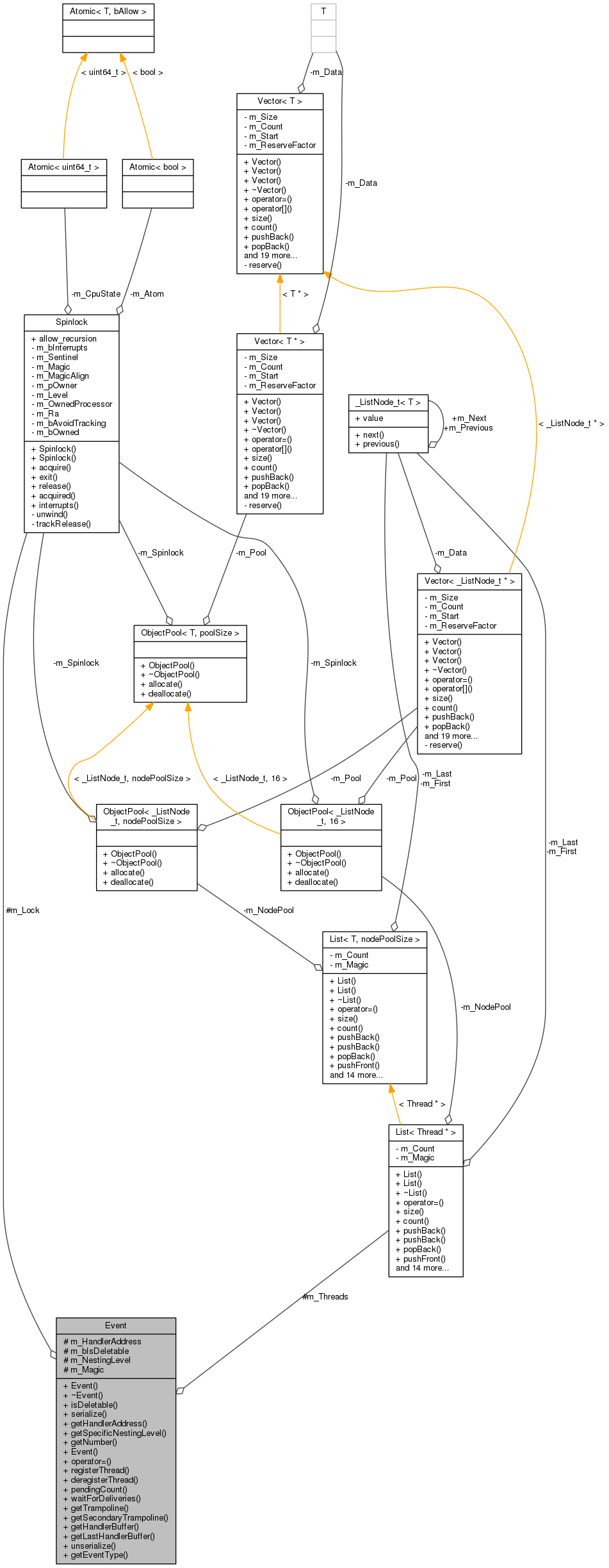
Classes | |
| class | Delivery |
| class | Retirement |
| class | SendLease |
Public Types | |
| enum class | HandlerPrivilege { Kernel , User } |
| enum class | UserReturnDelivery { NotApplicable , Delivered , Failed } |
Public Member Functions | |
| Event (uintptr_t handlerAddress, bool isDeletable, size_t specificNestingLevel=~0UL, HandlerPrivilege handlerPrivilege=HandlerPrivilege::Kernel) | |
| virtual bool | isDeletable () |
| virtual size_t | serialize (uint8_t *pBuffer)=0 |
| uintptr_t | getHandlerAddress () |
| HandlerPrivilege | getHandlerPrivilege () const |
| bool | isValidHandlerMapping (size_t mappingFlags) const |
| virtual bool | isSignalEvent () const |
| virtual bool | prefersAlternateUserStack () const |
| virtual bool | requiresExactUserReturnState () const |
| virtual UserReturnDelivery | deliverAtUserReturn (InterruptState &) |
| virtual UserReturnDelivery | deliverAtUserReturn (SyscallState &) |
| virtual bool | isDeliverableWhileProcessSuspended () const |
| virtual Event * | cloneForDelivery () |
| size_t | getSpecificNestingLevel () |
| virtual size_t | getNumber ()=0 |
| Event (const Event &other) | |
| Event & | operator= (const Event &other) |
| size_t | pendingCount () |
| bool | tryAcquireRegistration (SendLease ®istration) |
| virtual void | waitForDeliveries () |
| void | retire () |
| void | beginRetirement (Retirement &retirement) |
Static Public Member Functions | |
| static uintptr_t | getTrampoline () |
| static uintptr_t | getSecondaryTrampoline () |
| static uintptr_t | getHandlerBuffer () |
| static size_t | getHandlerBufferSize () |
| static uintptr_t | getLastHandlerBuffer () |
| static bool | unserialize (uint8_t *pBuffer, Event &event) |
| static size_t | getEventType (uint8_t *pBuffer) |
Protected Attributes | |
| uintptr_t | m_HandlerAddress |
| HandlerPrivilege | m_HandlerPrivilege |
| bool | m_bIsDeletable |
| size_t | m_NestingLevel |
| uint64_t | m_Magic |
| List< Thread * > | m_Threads |
| Spinlock | m_Lock |
Private Member Functions | |
| SendLease | beginSend () |
| void | endSend () |
| void | finishRetirement () |
| bool | registerThread (Thread *thread) |
| void | deregisterThread (Thread *thread) |
| void | completeDelivery (Thread *thread) |
| void | beginDispatch (Delivery *delivery) |
| void | endDispatch (Delivery *delivery) |
Static Private Member Functions | |
| static constexpr size_t | handlerBufferSize (size_t pageSize) |
Private Attributes | |
| bool | m_DeleteWhenUnused |
| bool | m_DeliveriesClosed |
| bool | m_DrainClaimed |
| size_t | m_SendersInFlight |
| Delivery * | m_pFirstActiveDelivery |
| WaitQueue | m_DeliveryWaiters |
Friends | |
| class | Thread |
Detailed Description
The abstract base class for an asynchronous event. An event can hold any amount of information up to a hard maximum size of EVENT_LIMIT (usually 4096 bytes). An event is serialized using the virtual serialize() function and sent to a recipient thread in either user or kernel mode, where it is unserialized.
Member Enumeration Documentation
◆ HandlerPrivilege
|
strong |
◆ UserReturnDelivery
|
strong |
Constructor & Destructor Documentation
◆ Event() [1/2]
| Event::Event | ( | uintptr_t | handlerAddress, |
| bool | isDeletable, | ||
| size_t | specificNestingLevel = ~0UL, |
||
| HandlerPrivilege | handlerPrivilege = HandlerPrivilege::Kernel |
||
| ) |
Constructs an Event object.
- Parameters
-
handlerAddress The address of the handling function. isDeletable Can the object be deleted after map()? This is used for creating objects without worrying about destroying them. specificNestingLevel Is the event pinned to a specific nesting level? If this value is not ~0UL, then the event will only be fired if the current nesting level is specificNestingLevel.handlerPrivilege The privilege level at which the handler may execute.
- Note
- As can be surmised, handlerAddress is NOT reentrant. If you use this Event in multiple threads concurrently, you CANNOT change the handler address.
◆ ~Event()
◆ Event() [2/2]
Member Function Documentation
◆ beginDispatch()
|
private |
Tracks an Event::Delivery while its kernel callback is active.
Definition at line 397 of file Event.cc.
References m_Lock, and m_pFirstActiveDelivery.
◆ beginRetirement()
| void Event::beginRetirement | ( | Retirement & | retirement | ) |
Begins retirement while keeping storage pinned so the owner can remove raw pointers from external notification registries.
Definition at line 484 of file Event.cc.
References m_bIsDeletable, m_DeliveriesClosed, m_DeliveryWaiters, m_DrainClaimed, m_Lock, and m_SendersInFlight.
Referenced by retire().
Here is the caller graph for this function:
◆ beginSend()
|
private |
Admits and pins one sender before it touches any other Event state.
Definition at line 280 of file Event.cc.
References m_DeliveriesClosed, m_DeliveryWaiters, m_Lock, and m_SendersInFlight.
Referenced by Thread::replaceSignalEvent(), Thread::sendEvent(), and tryAcquireRegistration().
Here is the caller graph for this function: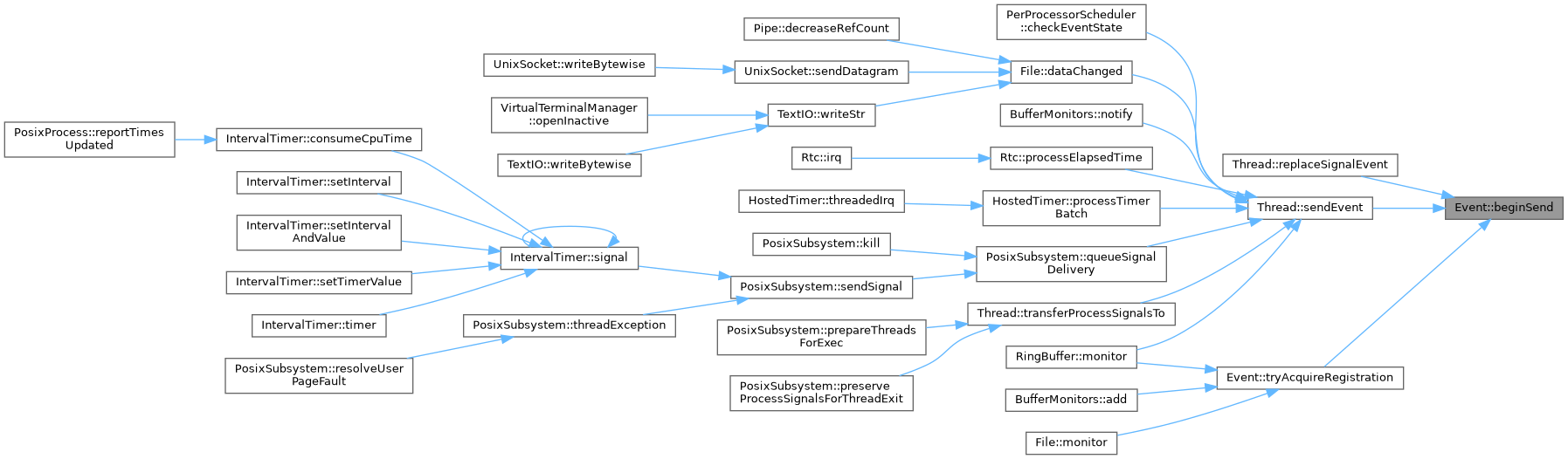
◆ cloneForDelivery()
|
inlinevirtual |
Returns the instance to enqueue for one delivery. Most events enqueue themselves; signal dispositions return an independently owned snapshot.
Reimplemented in SignalEvent, and LinuxAmd64Signal::AsyncEvent.
◆ completeDelivery()
|
private |
Completes exactly one delivery. Deletable events are retired only after their final queued or active delivery releases its registration.
Definition at line 348 of file Event.cc.
References List< T, nodePoolSize >::begin(), List< T, nodePoolSize >::count(), List< T, nodePoolSize >::end(), List< T, nodePoolSize >::erase(), m_bIsDeletable, m_DeleteWhenUnused, m_DeliveryWaiters, m_Lock, m_SendersInFlight, and m_Threads.
Referenced by Thread::replaceSignalEvent(), Thread::sendEvent(), Thread::shutdown(), and Thread::transferProcessSignalsTo().
Here is the caller graph for this function: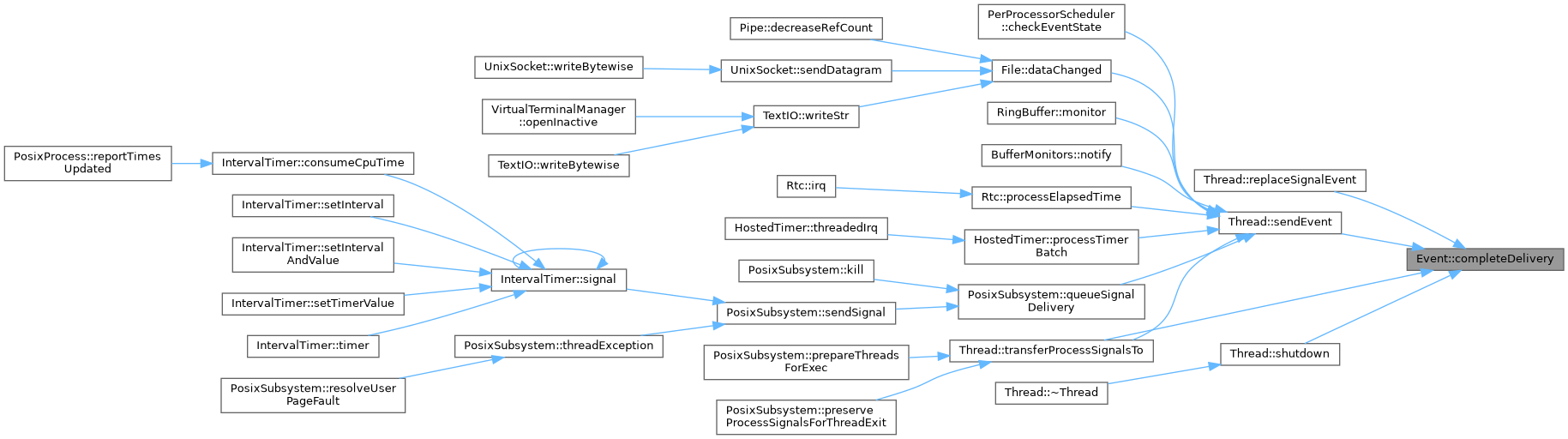
◆ deliverAtUserReturn() [1/2]
|
inlinevirtual |
Delivers this event by editing an interrupt return frame in place.
Reimplemented in LinuxAmd64Signal::AsyncEvent.
Definition at line 259 of file Event.h.
Referenced by PerProcessorScheduler::checkEventState().
Here is the caller graph for this function:
◆ deliverAtUserReturn() [2/2]
|
inlinevirtual |
Delivers this event by editing a syscall return frame in place.
Reimplemented in LinuxAmd64Signal::AsyncEvent.
◆ deregisterThread()
|
private |
Deregisters exactly one enqueue without transferring ownership.
Definition at line 321 of file Event.cc.
References List< T, nodePoolSize >::begin(), List< T, nodePoolSize >::count(), List< T, nodePoolSize >::end(), List< T, nodePoolSize >::erase(), m_DeleteWhenUnused, m_DeliveryWaiters, m_Lock, m_SendersInFlight, and m_Threads.
Referenced by Thread::cullEvent(), Thread::replaceSignalEvent(), and Thread::sendEvent().
Here is the caller graph for this function:
◆ endDispatch()
◆ endSend()
◆ finishRetirement()
◆ getEventType()
|
static |
Given a serialized event, returns the type of that event (a constant from eventNumbers.h).
◆ getHandlerAddress()
|
inline |
Returns the handler address.
Definition at line 231 of file Event.h.
Referenced by PerProcessorScheduler::checkEventState(), and PosixSubsystem::getSignalDisposition().
Here is the caller graph for this function:
◆ getHandlerBuffer()
|
static |
Retrieves the event handler buffer memory address.
Definition at line 213 of file Event.cc.
References PhysicalMemoryManager::getPageSize(), and getTrampoline().
Referenced by PerProcessorScheduler::checkEventState(), and getLastHandlerBuffer().
Here is the caller graph for this function:
◆ getHandlerBufferSize()
|
static |
Retrieves the target-page-rounded size of one event handler buffer.
Definition at line 217 of file Event.cc.
References PhysicalMemoryManager::getPageSize().
Referenced by PerProcessorScheduler::checkEventState(), and getLastHandlerBuffer().
Here is the caller graph for this function: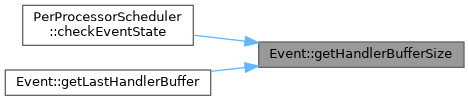
◆ getHandlerPrivilege()
|
inline |
Returns the privilege level at which the handler may execute.
Definition at line 236 of file Event.h.
Referenced by PerProcessorScheduler::checkEventState().
Here is the caller graph for this function:
◆ getLastHandlerBuffer()
|
static |
Retrieves the last handler buffer memory address.
Definition at line 221 of file Event.cc.
References getHandlerBuffer(), and getHandlerBufferSize().
◆ getNumber()
|
pure virtual |
Returns the event number / ID.
Implemented in IoEvent, PollEvent, SelectEvent, Semaphore::SemaphoreEvent, SignalEvent, Time::DelayTimerEvent, and RelayEvent.
Referenced by PerProcessorScheduler::checkEventState(), Thread::replaceSignalEvent(), and Thread::sendEvent().
Here is the caller graph for this function:
◆ getSecondaryTrampoline()
|
static |
Retrieves the secondary trampoline memory address.
Definition at line 209 of file Event.cc.
References getTrampoline().
◆ getSpecificNestingLevel()
|
inline |
◆ getTrampoline()
|
static |
Retrieves the main trampoline memory address.
Definition at line 201 of file Event.cc.
References EMIT_IF, VirtualAddressSpace::getKernelAddressSpace(), and VirtualAddressSpace::getKernelEventBlockStart().
Referenced by PerProcessorScheduler::checkEventState(), getHandlerBuffer(), and getSecondaryTrampoline().
Here is the caller graph for this function:
◆ handlerBufferSize()
|
inlinestaticconstexprprivate |
◆ isDeletable()
|
virtual |
Returns true if the event is on the heap and can be deleted when handled. This is for creating fire-and-forget messages and not worrying about memory leaks.
Definition at line 225 of file Event.cc.
References m_bIsDeletable.
Referenced by PerProcessorScheduler::checkEventState(), SignalEvent::cloneForDelivery(), and LinuxAmd64Signal::AsyncEvent::cloneForDelivery().
Here is the caller graph for this function: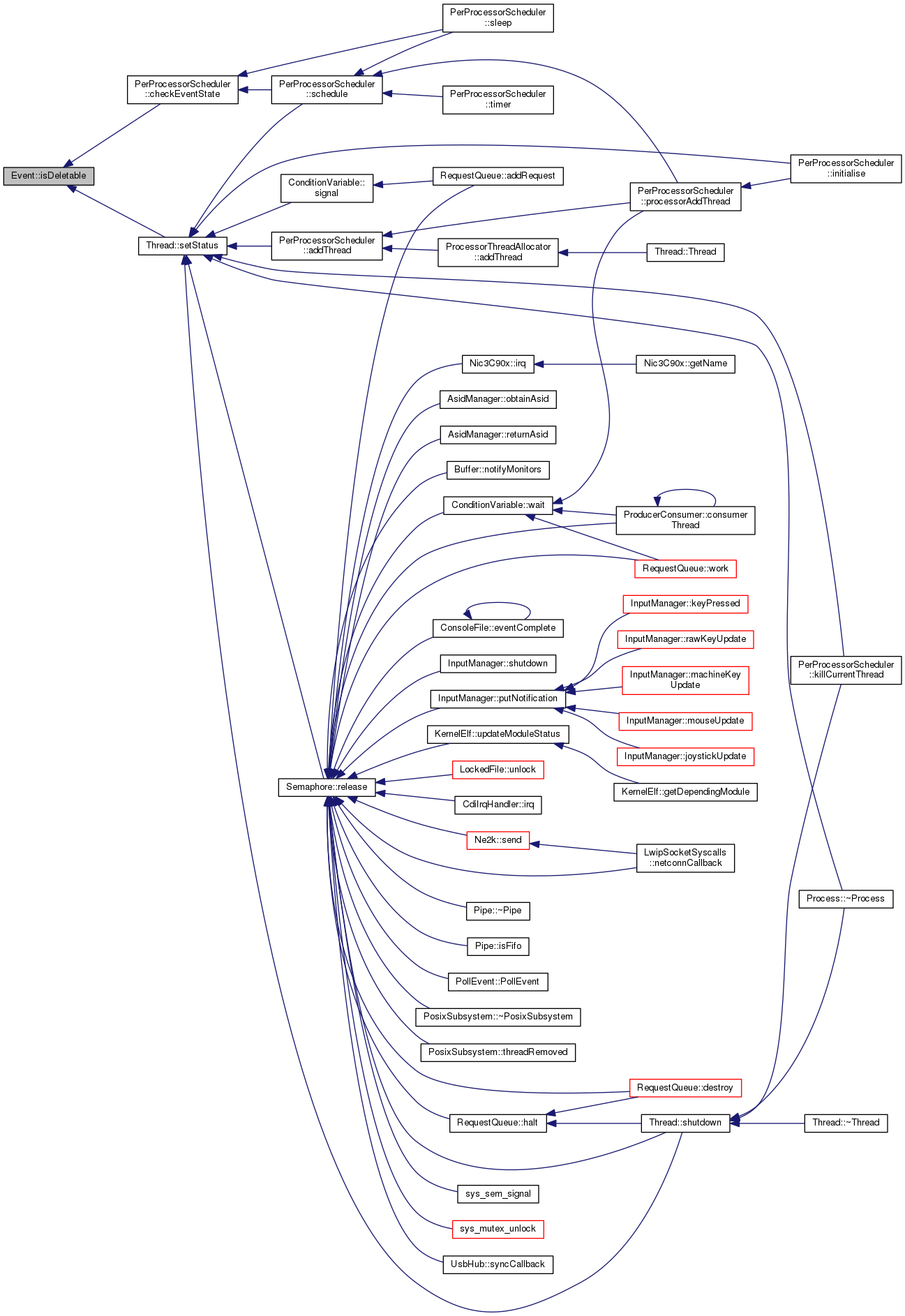
◆ isDeliverableWhileProcessSuspended()
|
inlinevirtual |
Returns whether this event can run before a suspended process resumes.
Reimplemented in SignalEvent.
◆ isSignalEvent()
|
inlinevirtual |
Returns true if this event is subject to the thread's signal mask.
Reimplemented in SignalEvent.
Definition at line 244 of file Event.h.
Referenced by PerProcessorScheduler::checkEventState(), Thread::markDeferredUserReturnSignalInterruption(), Thread::replaceSignalEvent(), and Thread::sendEvent().
Here is the caller graph for this function: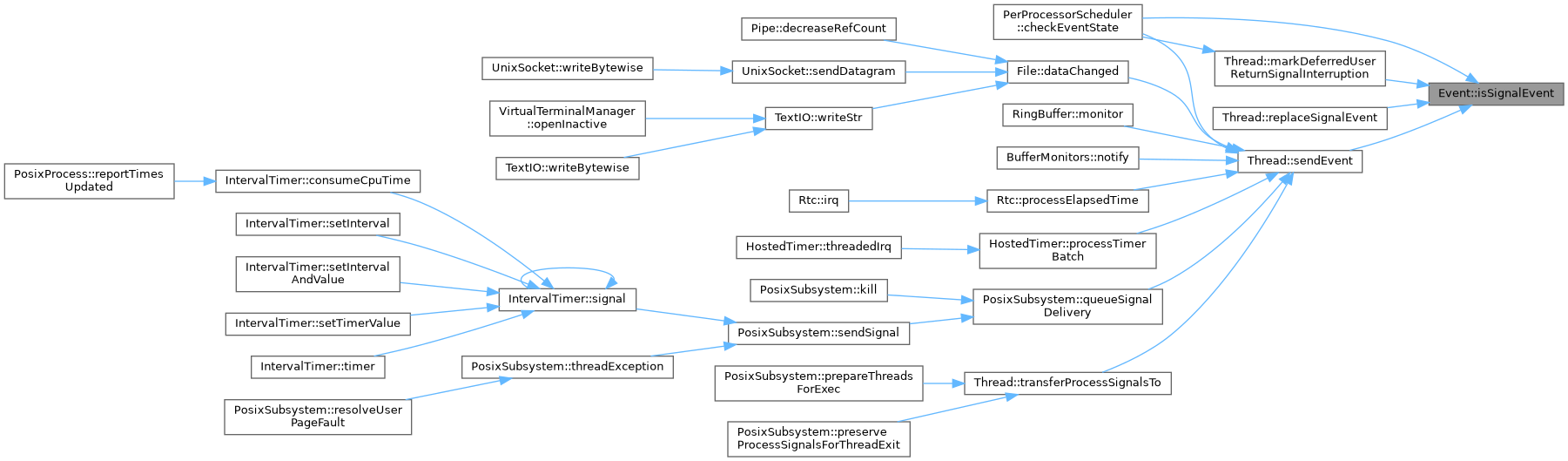
◆ isValidHandlerMapping()
| bool Event::isValidHandlerMapping | ( | size_t | mappingFlags | ) | const |
Returns whether page-table flags permit this handler's privilege.
Definition at line 229 of file Event.cc.
References VirtualAddressSpace::Execute, VirtualAddressSpace::KernelMode, and m_HandlerPrivilege.
Referenced by PerProcessorScheduler::checkEventState().
Here is the caller graph for this function:
◆ operator=()
◆ pendingCount()
| size_t Event::pendingCount | ( | ) |
Gets the number of queued or actively dispatched deliveries.
Definition at line 386 of file Event.cc.
References List< T, nodePoolSize >::count(), m_Lock, and m_Threads.
◆ prefersAlternateUserStack()
|
inlinevirtual |
Returns whether a userspace handler prefers the thread's signal stack.
Reimplemented in SignalEvent.
Definition at line 249 of file Event.h.
Referenced by PerProcessorScheduler::checkEventState().
Here is the caller graph for this function:
◆ registerThread()
|
private |
Registers one enqueue while delivery admission remains open.
Definition at line 312 of file Event.cc.
References m_DeliveriesClosed, m_Lock, m_Threads, and List< T, nodePoolSize >::pushBack().
Referenced by Thread::replaceSignalEvent(), and Thread::sendEvent().
Here is the caller graph for this function: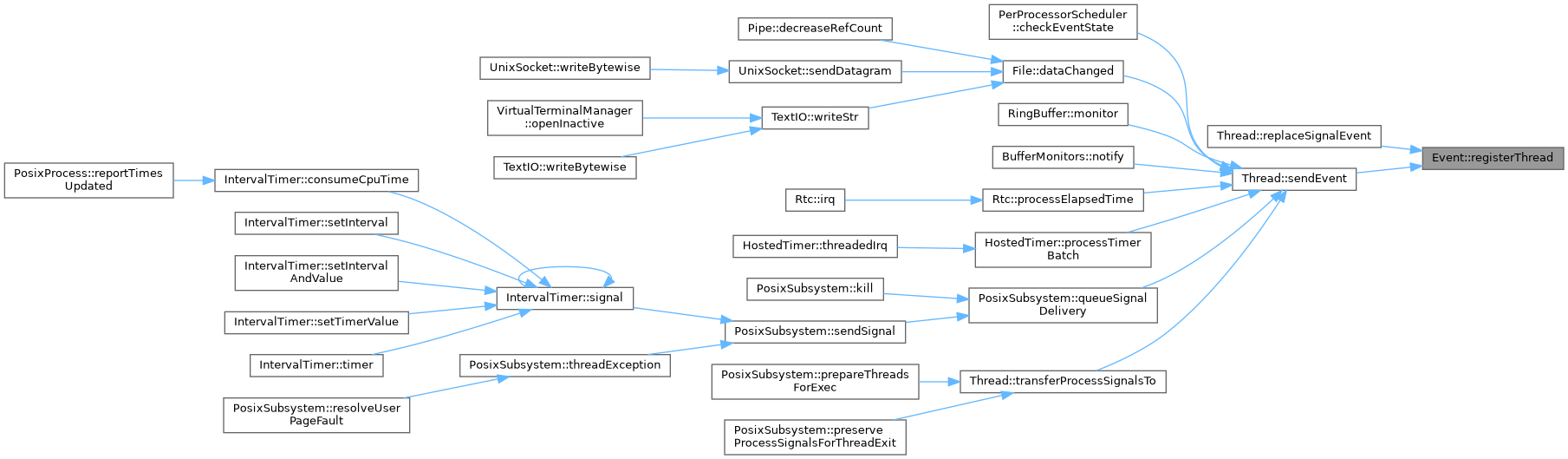
◆ requiresExactUserReturnState()
|
inlinevirtual |
Returns true when this event cannot run without the raw user context.
Reimplemented in LinuxAmd64Signal::AsyncEvent.
Definition at line 254 of file Event.h.
Referenced by PerProcessorScheduler::checkEventState().
Here is the caller graph for this function:
◆ retire()
| void Event::retire | ( | ) |
Closes delivery admission and deletes this heap-owned Event after the final queued or active delivery drains. The caller must discard its pointer immediately.
Definition at line 479 of file Event.cc.
References beginRetirement().
Referenced by PosixSubsystem::getSignalDisposition().
Here is the caller graph for this function:
◆ serialize()
|
pure virtual |
Given a buffer EVENT_LIMIT bytes long, take the variables present in this object and convert them to a binary form.
It can be assumed that this function will only be called when the Event is about to be dispatched, and so the inhibited mask of the current Thread is available to be changed to what the event handler requires. This change will be undone when the handler completes.
- Parameters
-
pBuffer The buffer to serialize to.
- Returns
- The number of bytes serialized.
Implemented in RelayEvent, IoEvent, PollEvent, SelectEvent, Semaphore::SemaphoreEvent, SignalEvent, and Time::DelayTimerEvent.
Referenced by PerProcessorScheduler::checkEventState().
Here is the caller graph for this function:
◆ tryAcquireRegistration()
| bool Event::tryAcquireRegistration | ( | SendLease & | registration | ) |
Pins this Event while an external notification source stores its pointer. Returns an empty lease once retirement has begun.
Definition at line 392 of file Event.cc.
References beginSend().
Referenced by BufferMonitors::add(), File::monitor(), and RingBuffer< T, preallocatedSize >::monitor().
Here is the caller graph for this function: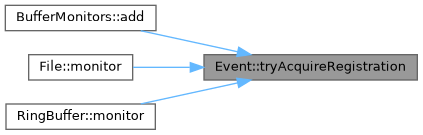
◆ unserialize()
|
static |
◆ waitForDeliveries()
|
virtual |
Closes delivery admission and waits until every queued or active delivery has drained. Calling this from this Event's own active kernel handler is a contract violation; heap owners which can retire from a handler must use retire().
Definition at line 433 of file Event.cc.
References List< T, nodePoolSize >::count(), EMIT_IF, ProcessorBase::information(), m_bIsDeletable, m_DeliveriesClosed, m_DeliveryWaiters, m_DrainClaimed, m_Lock, m_pFirstActiveDelivery, m_SendersInFlight, and m_Threads.
Friends And Related Symbol Documentation
◆ Thread
Member Data Documentation
◆ m_bIsDeletable
|
protected |
Can the object be deleted after map?
Definition at line 330 of file Event.h.
Referenced by beginRetirement(), completeDelivery(), isDeletable(), and waitForDeliveries().
◆ m_DeleteWhenUnused
|
private |
A completed delivery requested deletion once all leases drain.
Definition at line 374 of file Event.h.
Referenced by completeDelivery(), and deregisterThread().
◆ m_DeliveriesClosed
|
private |
No delivery can register after close-and-drain begins.
Definition at line 377 of file Event.h.
Referenced by beginRetirement(), beginSend(), registerThread(), and waitForDeliveries().
◆ m_DeliveryWaiters
|
private |
Waiters for the final queued or active delivery to drain.
Definition at line 389 of file Event.h.
Referenced by beginRetirement(), beginSend(), completeDelivery(), deregisterThread(), and waitForDeliveries().
◆ m_DrainClaimed
|
private |
Exactly one owner may execute the permanent close-and-drain.
Definition at line 380 of file Event.h.
Referenced by beginRetirement(), and waitForDeliveries().
◆ m_HandlerAddress
|
protected |
◆ m_HandlerPrivilege
|
protected |
Privilege level at which the handler may execute.
Definition at line 327 of file Event.h.
Referenced by isValidHandlerMapping().
◆ m_Lock
|
protected |
Spinlock for controlling access to the thread list.
Definition at line 342 of file Event.h.
Referenced by beginDispatch(), beginRetirement(), beginSend(), completeDelivery(), deregisterThread(), pendingCount(), registerThread(), and waitForDeliveries().
◆ m_Magic
|
protected |
◆ m_NestingLevel
|
protected |
◆ m_pFirstActiveDelivery
|
private |
Intrusive active-callback list; Delivery owns the link storage.
Definition at line 386 of file Event.h.
Referenced by beginDispatch(), and waitForDeliveries().
◆ m_SendersInFlight
|
private |
sendEvent calls admitted before close-and-drain.
Definition at line 383 of file Event.h.
Referenced by beginRetirement(), beginSend(), completeDelivery(), deregisterThread(), and waitForDeliveries().
◆ m_Threads
One entry per queued or actively dispatched delivery.
Definition at line 339 of file Event.h.
Referenced by completeDelivery(), deregisterThread(), pendingCount(), registerThread(), and waitForDeliveries().
The documentation for this class was generated from the following files: